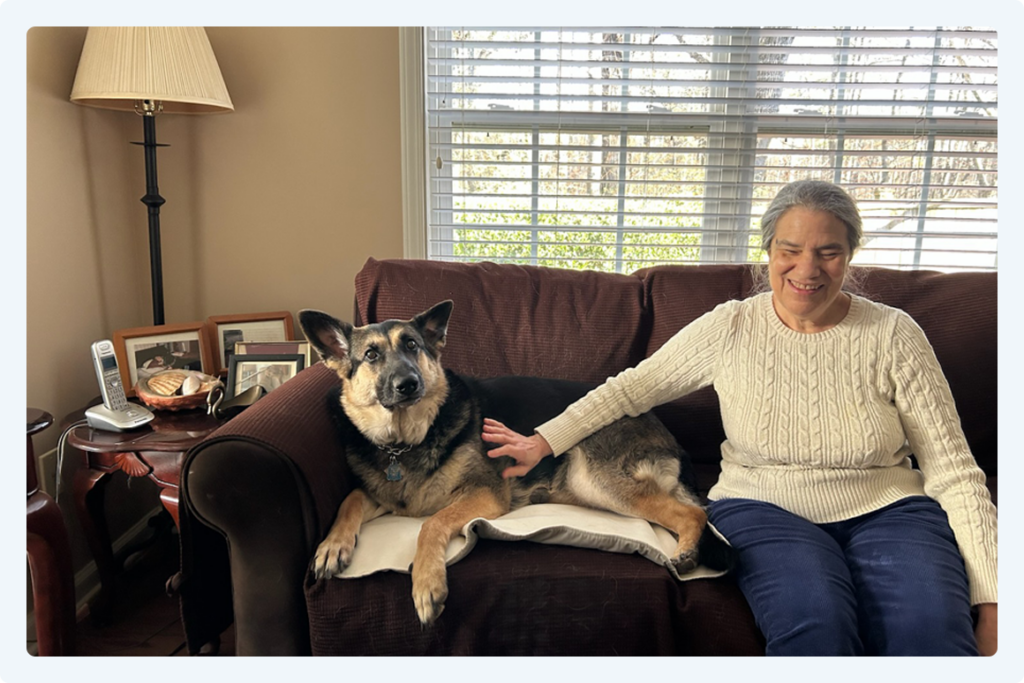
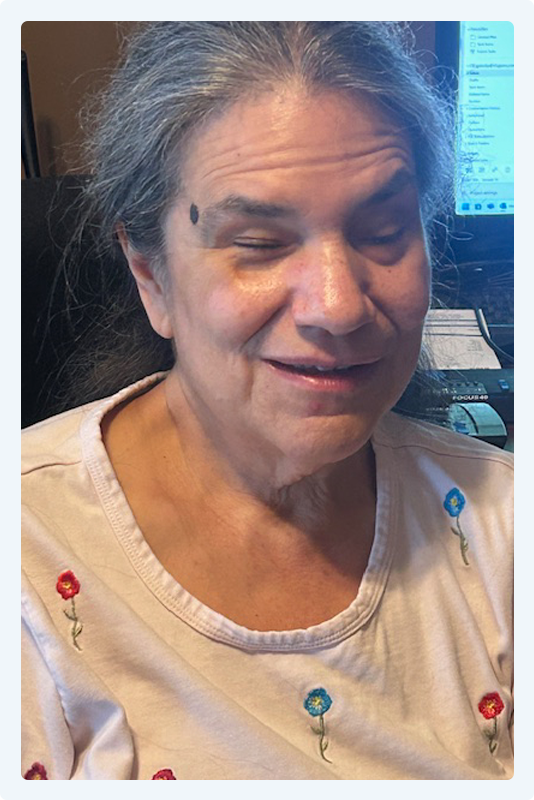
Our monthly Employee Spotlight series gives you a glimpse behind the scenes and brings you closer to the people behind the products at Vispero. This month, we are honoring Olga Espínola, a longtime Vispero team member whose work and advocacy have helped shape Braille and math accessibility across our products. Olga retired this past year after a remarkable career dedicated to access, education, and mentorship. We sat down with Olga to reflect on her journey, her passion for accessibility, and the legacy she leaves behind.
How long were you with Vispero, and what roles did you hold during your time here?
Olga: I joined Freedom Scientific in early 2003. Over the years, I worked in scripting, testing, and accessibility validation, with a strong focus on Braille and math, as well as localization of the languages supported by JAWS. I spent my first 7.5 years in scripting and my last almost 15 years in the test department, but I regularly collaborated with engineering, documentation, and the teams in the field.
How did you first become interested in accessibility and assistive technology?
Olga: Accessibility has always been part of my life. I was born totally blind due to congenital glaucoma and lost all light perception by the time I was six. For my own education, especially in math and science. There were no formal state or federal laws for persons with disabilities until 1973, and better laws in 1990.
Your career has touched education, finance, programming, and accessibility. What connects all of those experiences?
Olga: Mentorship connects everything. My life has always been about being mentored and mentoring others. Whenever I learned something new, especially about technology, I shared it with the blind community. I believe knowledge grows when it is shared.
What is one area of Vispero’s products that you are especially proud to have influenced?
Olga: Math and Braille accessibility. For many years, advanced math was simply not accessible to blind users. When I first saw a quadratic formula displayed correctly on a Braille display, it was an emotional moment for me. It meant that blind people could once again fully participate in math and science.
Why is Braille literacy still important today?
Olga: Literacy cannot be audio-only. Braille provides structure, spelling, and deeper comprehension. Fewer than five percent of blind people in the United States read Braille today, and that has serious consequences for education and employment. If you want true literacy, especially in technical subjects, you need something under your fingers.
How would you describe your approach to working with teams at Vispero?
Olga: I focus on details and on what truly matters to users. I ask questions, and I push for improvements because accessibility is always evolving. My goal has always been to help Vispero deliver better products for the people who rely on them.
What advice would you give to people working in accessibility today?
Olga: Never stop learning and never be afraid to share what you know. When people share knowledge, everyone grows. That is how we make accessibility better for the entire community.
What would you like people to remember most about your time at Vispero?
Olga: I hope people remember that I cared deeply about users and about doing the work the right way. I wanted to help make products better and to help people grow along the way.
We also had the pleasure of speaking with Ryan Jones, who worked closely with Olga for many years at Vispero, to better understand her impact from inside the company.
How did Olga impact Vispero from your perspective?
Ryan: Olga was a true advocate for Vispero’s users. She consistently pushed the team to raise the bar for Braille and math accessibility and to stay current with the latest tools and standards. Her attention to detail influenced everyone around her and strengthened our products. She positively challenged us and always kept the focus on what mattered most to users.